Realizing the Aesthetic of Memory: Lighting in Lady Bird
- Julie Fenske
- Jan 21, 2020
- 4 min read
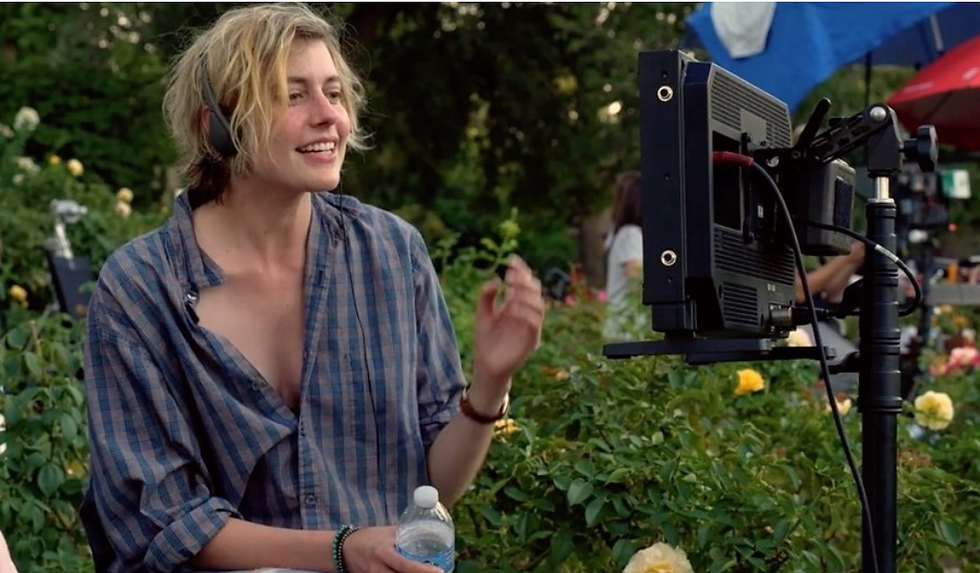
To me, Lady Bird is a comfort film. It is soft, wispy at the edges with youthful memory and full to the brim with heart. Director Greta Gerwig infuses her first film with love and care and with the intention to make it “look like a memory.” She achieves this through her use of light: in gold, in shadow, at every time of day, the lighting informs us about the nature of each of the characters and their relationship to each other. Gerwig speaks to her audience through her lighting, revealing beautiful truths about girlhood, life, and love.
In the world of Lady Bird, lighting establishes the story’s varying tones. Gerwig makes use of natural light, especially the golden hues of sunlight, to share what a scene will say about its participants. She most often uses shades of gold to bathe moments in a romantic or romanticized light. In an early scene, Lady Bird and Julie are walking through a wealthy neighborhood after school, envisioning cushy home lives and being able to say, “Mom, I’m bringing the snacks to the T.V. room!” Late afternoon sun rushes in from all sides, shaping the glow of these dreams. The gold hints at a nostalgia, as well. We are supposed to remember our teenage years as our best; our golden years. Quietly, Gerwig subverts this belief throughout, showing Lady Bird stumbling through her senior year, dealing with the small contradictions that coming of age brings. The subtle lighting of Danny and Kyle in shadow indicate they are not right for Lady Bird; the use of harsh fluorescents serve to realize the harsh realities of adult existence, especially in scenes related to Father Leviatch’s struggles with depression; the hazy feeling of each scene reminds us that this time is fleeting.
Warmer tones are also used in the scene where Lady Bird and Marion visit model homes, their favorite Sunday activity. They ooh and ah as the light drips in, languid slants emphasizing that their envisioned lives in these homes aren’t real, just an idealized version. But wouldn’t it be nice? These fantasies are a central component to Lady Bird’s growth - she has to eventually choose to accept who she is and where she comes from. Wrong side of the tracks? No. When Jenna realizes that Lady Bird does not, in fact, live in the “dream house,” she finds our heroine standing PJ-clad in her kitchen, shoulders hunched in defeat and in defense. Despite all her grand illusions, the light gives the truth away. Gerwig lets the natural light do the talking, showing the audience that here, in her real home, Lady Bird is just Christine. Natural lighting is often used throughout the film to explore life’s hard truths, such as here with Jenna, or in a later scene with Marion, where she refuses to talk to Lady Bird after finding out about her wait list hopes. The light reveals what Lady Bird has been attempting to ignore: she lied; she was deceptive; but above all, she didn’t want to admit that she wanted more. Gerwig uncovers with natural light, but it isn’t all somber underneath.
Most of the scenes at Immaculate Heart are lit with natural light, a softness drifting through the windows. Lady Bird struggles against her identity in school as well as home, and many scenes serve to show this. She is shown, through this natural light, in her true forms - bored in classes, wishing she were better at math, discussing her small rebellions with Sister Sarah Joan. Natural hazes surround her at the grocery store with Julie, whilst stealing a magazine, and while thrift shopping with Marion. Over all her assumed identities, this is who she really is. Lady Bird is a girl with big dreams who intends to make them reality, but she is also a normal teenager, someone who is uncertain and scared. If we were all shown in our natural lights, I assume it would look a lot like this - attempting to figure out who you are and who you want to be amidst a sea of people telling you who you should be.
Gerwig utilizes golden hazes in sentimental ways as well. Scenes in which Lady Bird and Julie are together are often tinged with gold. The parallels of Marion and Lady Bird driving through Sacramento at the end of the film are shown flooded with golden sunlight. Here, Gerwig shows Sacramento with the same affection and care that Lady Bird uses to write about it. The light flatters every landmark; nothing but this best version can emerge. The significance of the shades of gold here is that they represent love. When Lady Bird drives through the bends she’s known her whole life, she thinks of Marion and realizes all the small sacrifices her mom had made for her that led her to this moment. Framed in the soft morning light, finding peace in a piece of home, she recognizes that she now believes what she had is precious to her. Standing in New York, a thousand miles away, she wonders, “Did you feel emotional the first time that you drove in Sacramento?” She can’t go back, and an exciting future lies ahead, untainted by who she was a few months before, but this is an important moment for her. Gerwig explains, “There’s something so inevitable about the process of growing up and denying where you’re from, then realizing two minutes too late that it is a beautiful place.” How seamlessly she infuses this into the core of Lady Bird.
I say this is my comfort movie for a myriad of reasons. The kinship I feel with Lady Bird and her experience, the way the script makes me laugh and cry within the same scene, the way Lady Bird realizes her dreams and who she is. However, I wouldn’t be able to feel so deeply without the way Gerwig drapes the light. My love for Lady Bird and Julie’s friendship is multiplied when they’re swathed in gold. My heart wrenches just a little further to the left when I see Lady Bird and Marion struggling to understand each other in the sobering afternoon light. I surrender to my tears when I see the McPhersons driving to the airport, the sun setting on this era of their lives. No stone is left unturned when it comes to the light of memory in Lady Bird, and that is what makes this movie so tangible and real.


Comments